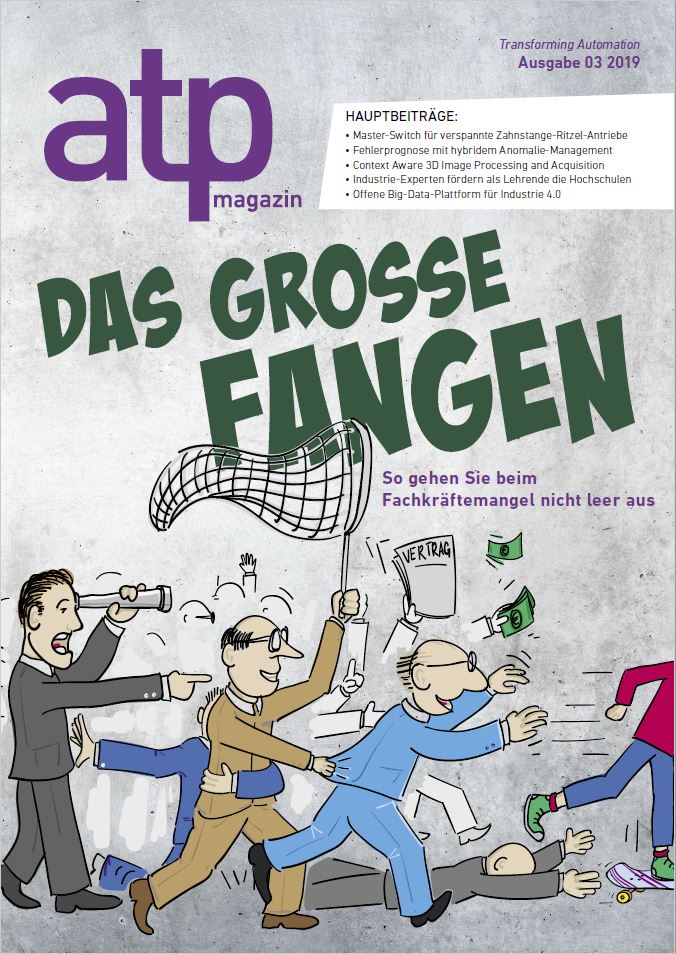
Promoting industrial experts as lecturers
Contribution to teaching automation and control theory
DOI:
https://doi.org/10.17560/atp.v61i3.2391Keywords:
Control engineering education, industrial processes, automation, process control, PIDAbstract
The exchange between industry and academia is of great importance. One effective but often overlooked form of exchange is the inclusion of guest lectures by industry experts in the syllabus. This paper discusses examples of industrial lecturers in process control and automation and gives an overview of lectures delivered by ABB
employees. An example details how a feedback control loop is seen in the context of automation. Prerequisites for a successful exchange and the benefits for students, academics and industry are discussed.
References
Bruneel, J., d’Este, P., & Salter, A. (2010). Investigating the factors that diminish the barriers to university–industry collaboration. Research policy, 39(7), 858-868.
Clausen, T. (1998). Project Work as an Integrating and Revenue-Making Tool.
Guimón, J. (2013). Promoting university-industry collaboration in developing countries. World Bank, 3.
Haag, S., Guilbeau, E., & Goble, W. (2006). Assessing engineering internship efficacy: Industry's perception of student performance. International Journal of Engineering Education, 22(2), 257.
Kolmos, A. (1996). Reflections on project work and problem-based learning. European journal of engineering education, 21(2), 141-148.
Åström, K.J. (2016). Travels in process reality. LCCC Process Control Workshop, Lund, Sweden, Sep 28-30. Abgerufen von: https://www.lccc.lth.se/index.php?page=karljohan-astrom
Downloads
Published
Issue
Section
License
Die Zeitschrift und alle in ihr enthaltenen Beiträge und Abbildungen sind urheberrechtlich geschützt. Jede Verwertung außerhalb der engen Grenzen des Urheberrechtsgesetzes ist ohne Zustimmung des Verlages unzulässig und strafbar. Das gilt insbesondere für Vervielfältigungen, Übersetzungen, Mikroverfilmungen und die Einspeicherung und Bearbeitung in elektronischen Systemen. Auch die Rechte der Wiedergabe durch Vortrag, Funk- und Fernsehsendung, im Magnettonverfahren oder ähnlichem Wege bleiben vorbehalten.